
Services
Zero Trust Architecture
Design a security model that continuously verifies users, devices, workloads, and access paths. Zero Trust I.T. Networks helps organizations build practical architectures that reduce lateral movement, strengthen control over critical assets, and support long-term resilience.
Approach
Built for modern risk
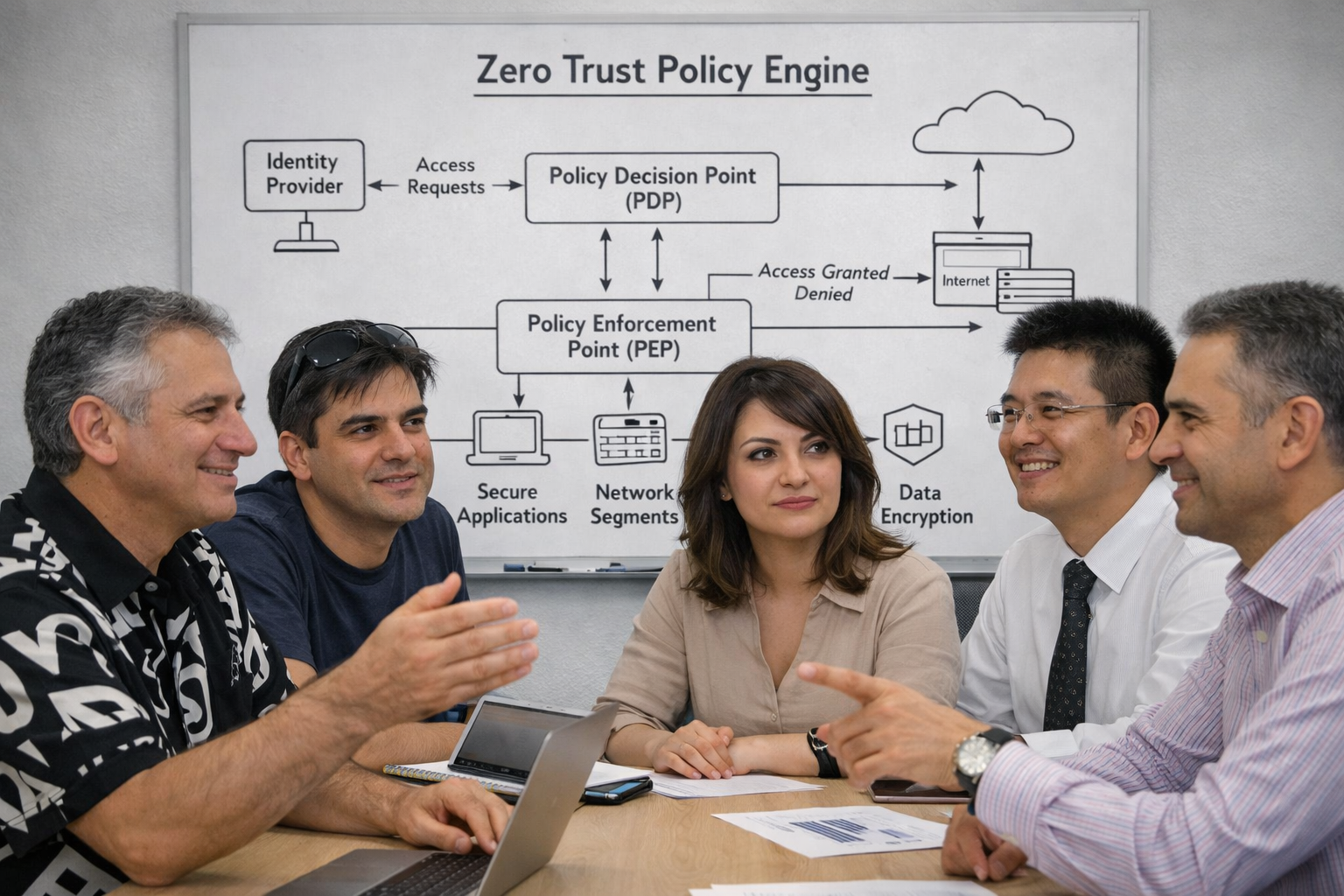
A strong zero trust architecture is more than a product decision. It is a structured framework for identity, segmentation, policy enforcement, visibility, and continuous validation across your environment.
Identity-first access
Establish access decisions around verified identity, device posture, and contextual signals instead of implicit network trust.
Segmentation strategy
Limit exposure between users, systems, and applications with logical segmentation that reduces the blast radius of compromise.
Policy design
Define clear, enforceable policies for least-privilege access, privileged workflows, third-party access, and sensitive resource protection.
Continuous visibility
Support ongoing monitoring, logging, and validation so controls remain aligned with operational change and emerging threats.
Outcomes
Architecture with measurable value
Our zero trust architecture engagements are designed to create a clear roadmap from current-state risk to prioritized security controls and implementation planning.
Reduced attack surface
Control access paths, isolate critical assets, and remove unnecessary trust relationships across the environment.
Stronger governance
Align architecture decisions with compliance expectations, internal policy requirements, and operational accountability.
How the engagement works
We guide the architecture process through a practical sequence that balances security priorities with operational realities.
01
Assess current state
Review infrastructure, identity controls, network design, access models, and existing security capabilities.
02
Define target architecture
Map the future-state model for trust boundaries, policy enforcement points, segmentation, and supporting technologies.
A well-designed zero trust architecture creates a repeatable foundation for secure growth, not just a one-time control update.
03
Prioritize the roadmap
Sequence initiatives based on risk reduction, implementation effort, dependencies, and business impact.
04
Support execution
Provide guidance for implementation planning, validation, and refinement as the environment evolves.